

Ravi is not just a visual storyteller—he’s a perceptive chronicler of our times. With several years of experience in filmmaking, content creation, and community-centered storytelling, Ravi’s work stands at the intersection of creativity, ethics, and social consciousness. He has spent years traversing India’s landscapes, from bustling cities to remote rural heartlands, documenting human stories that often go unheard. His camera doesn’t just capture faces—it captures contexts, conflicts, and truths.
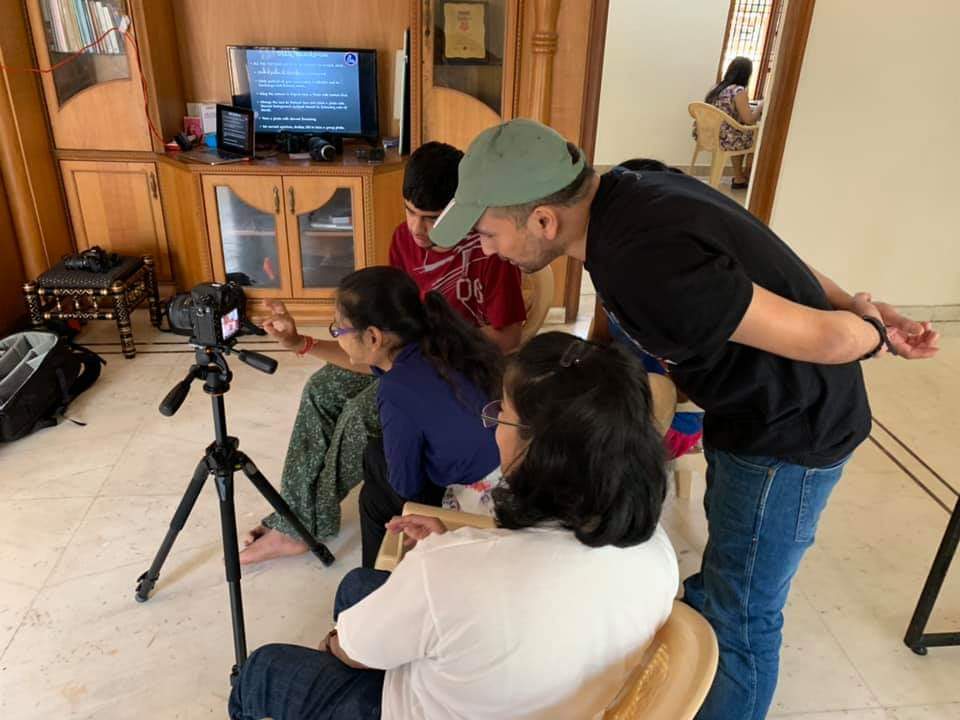
In this wide-ranging and deeply introspective interview series, we explore key themes that affect contemporary storytelling—ethics, impact, inclusion, and identity in the age of digital saturation. Ravi reflects not only on his personal journey but also on larger systemic shifts that are shaping how stories are told, who gets to tell them, and what it really means to be “authentic” in today’s hyper-visible media environment.
🎯 TL;DR – What’s in this Article?
In this article, we bring you snippets from our interview with Ravi, where he unpacks the critical difference between Participatory Storytelling—where communities co-create and reclaim their narratives—and Extractive Storytelling, where stories are taken from people without meaningful involvement or consent. Drawing on lived experiences, he examines the ethical pitfalls of mainstream content culture, the seduction of virality, and the systemic challenges small creators face. He also spotlights emerging hopeful trends—such as localized storytelling, slow interviews, and the rise of community-led content.
Towards the end, Ravi shares practical, grounded advice for aspiring content creators: how to stay rooted in purpose, why persistence matters more than views, and how to strike a sustainable balance between commercial survival and storytelling integrity.
Whether you’re a budding creator or a curious viewer, this article will help you reflect on what kind of storytelling truly matters—and why.
Question 2: As a Visual Storyteller, how do you view the paradigm of Participatory Storytelling (co-creating content with communities, not just about them) versus Extractive Storytelling?
As visual storytelling continues to evolve in the digital age, the conversation around ethics, authenticity, and community inclusion has become more important than ever. The contrast between participatory storytelling and extractive storytelling is not just a question of creative style—it reflects deeper questions about power, purpose, and the future of storytelling itself.
In this conversation, our storyteller lays bare the uncomfortable truths around extractive storytelling while painting a hopeful picture for a participatory future shaped by local voices, ethical intent, and creative integrity.
The Problem with Extractive Storytelling
At its core, extractive storytelling is about control—where the storyteller arrives with a pre-set narrative, and selectively gathers material to support it, often ignoring contradictions or the community’s own voice.
“Most of the time, creators already have a story in mind. They just extract the responses they want to fit that narrative. Anything that contradicts their idea is skipped.”
This imposition of narrative results in content that may appear polished, but lacks genuine representation. Even worse, it contributes to a cycle where stories are shaped not by truth, but by what is marketable.
Another troubling trend is the rise of content created merely for engagement metrics—likes, views, and shares—rather than any real storytelling goal or purpose. The creator noted that with the glamorization of content creation, many are jumping in without research, depth, or ethical intent.
“Everyone just wants to create something for the sake of it. There’s no ideology or goal—just the chase for impressions and monetization.”
How Participatory Storytelling Can Change the Game
Despite these challenges, the storyteller is optimistic. With smartphones, internet access, and editing tools becoming widely available, the future lies in locally rooted storytellers who understand their own communities intimately.
“Now the camera and tech are reaching smaller towns. Local youth are becoming creators. They understand their communities better and can reflect that richness in their work.”
This new wave of grassroots content creators holds the promise of truly participatory storytelling—where stories are not only about people but created with them. The storytelling process becomes a dialogue, not a monologue.
Interestingly, the interviewee draws a parallel with the decline of Indian adaptations of authentic platforms like Humans of New York. Many of these initiatives began with good intentions, inspired by reputable models of community-centric storytelling. However, some have unfortunately devolved into PR channels that primarily promote celebrities and politicians, thereby diluting their original purpose.
Spotting Red Flags: When Storytelling Turns Extractive
To avoid falling into extractive patterns, the storyteller advises creators to watch for these warning signs:
- Pre-decided narratives: When stories are sculpted to fit the creator’s expectations, not the subject’s truth.
- Lack of local voices: When communities are spoken about, not with.
- Engagement-first mindset: When the pursuit of virality overrides authenticity.
- No research or context: When creators drop into a space without understanding its dynamics.
“Everyone’s pressured to earn more and get more views. No one wants to research. That kills authenticity.”
Emerging Trends: Calm, Local, and Meaningful Content
Amidst the noise, a quieter but impactful trend is emerging—localized content with slower, deeper interviews. These creators are working outside the podcast or vlog formula, choosing to highlight voices from agriculture, tourism, crafts, and the environment in thoughtful, calm settings—often conducted in the local language and context.
“They’re doing calm interviews outdoors or in local studios with experts, elders, or change-makers. No sensationalism. Just grounded storytelling.”
This new genre might not rack up viral numbers immediately, but it’s gaining traction among viewers who seek authenticity over spectacle.
Systemic Changes Needed to Support Participatory Storytelling
The storyteller draws an insightful parallel: participatory storytelling is akin to parallel cinema—niche, profound, and impactful, but rarely mainstream.
“It’s difficult to be mainstream in India unless there’s masala. That’s the sad part. But meaningful content will find its audience—it just takes time.”
To support this ecosystem, the storyteller offers a few systemic recommendations:
- Algorithmic support: Platforms must tweak their algorithms to surface value-driven, community-led content.
- Sponsorships & funding: Corporates and the social sector can support local creators through grants or partnerships.
- Recognition of diverse genres: Institutions must acknowledge that not all content is built for virality, but still carries immense cultural and emotional value.
“Some social sector groups are funding human-centric content now. That initial push is what creators need to sustain.”
Advice to Aspiring Storytellers: How to Stay the Course
In closing, the storyteller shares personal insights for creators who want to build meaningful, participatory content:
✅ Be Persistent
Creating deep content is a long game. Don’t be discouraged by slow growth.
✅ Build a Sustainable Model
Do commercial work if needed to pay bills, while keeping your passion projects alive.
✅ Stay Grounded in Vision
Avoid chasing trends. Stay committed to your storytelling philosophy.
✅ Develop Local Networks
Collaborate with local voices. Let them shape the narrative from within.
✅ Believe in Cycles
Every few years, the dominant taste in content shifts. Thoughtful content will always find its time.
Key Actionables & Advice for Aspiring Storytellers:
| Area | Key Advice |
| Authenticity | Avoid pre-scripted narratives. Let stories evolve organically from the subject’s experience. |
| Research | Do your homework. Know the local context before you film. |
| Balance | Keep a secondary income stream so you can afford to create passion-driven content. |
| Inclusion | Co-create with communities. Feature their language, worldview, and representation. |
| Persistence | Be patient with growth. The audience for meaningful stories exists—it just takes time to reach them. |
| Systemic Support | Seek grants or funding from organizations supporting ethical storytelling. |
| Ignore the Noise | Don’t compete with masala content. That’s a different world. |
Final Reflection:
Participatory storytelling isn’t just a style—it’s a stance. It’s about handing over the mic, slowing down the lens, and letting real people co-author the narratives that shape them. In an age of loud content and short attention spans, choosing this path may seem like a rebel act. But as this storyteller reminds us, meaningful content will always find its way—quietly, persistently, and powerfully.